



Interoperable communication systems reduce emergency response times by up to 30%, yet many agencies still operate with fragmented technologies that slow coordination during critical moments. This article explores the essential components of public safety communication systems, the value of interoperability, emerging technologies, governance frameworks, common misconceptions, and practical steps to modernize your infrastructure for faster, more effective crisis response.
Table of Contents
- Introduction To Public Safety Communication Systems
- The Critical Role Of Interoperability
- Technological Evolution Of Communication Systems
- Governance And Leadership For Effective Communications
- Common Misconceptions And Pitfalls In Public Safety Communications
- Implementing And Upgrading Communication Systems
- Optimize Your Public Safety Communication Strategy With Expert Consulting
Key takeaways
| Point | Details |
|---|---|
| Integrated systems | Public safety communication systems combine radios, broadband, dispatch centers, and protocols to enable coordinated emergency response. |
| Interoperability value | Seamless communication across agencies reduces response times and enhances multi-jurisdictional collaboration. |
| Modern technology | FirstNet broadband and satellite backup improve data sharing, situational awareness, and resilience. |
| Governance matters | Clear policies, leadership structures, and training protocols reduce communication failures by 25%. |
| Upgrade planning | Careful assessment, budgeting, and expert engagement prevent delays and cost overruns during modernization. |
Introduction to public safety communication systems
Public safety communication systems are the technology and organizational frameworks that enable emergency responders to share information and coordinate actions during crises. These systems encompass several critical components working in concert:
- Land mobile radios (LMRs) for voice communication between field personnel
- Broadband networks supporting data-intensive applications like video and mapping
- Dispatch and command centers coordinating resources and maintaining situational awareness
- Standardized protocols and interoperability agreements enabling multi-agency collaboration
Each component plays a unique role. Radios provide reliable voice links in environments where cellular networks fail. Broadband systems deliver real-time data to support informed decision making. Dispatch centers serve as communication hubs, managing multiple channels and resources simultaneously.
When these elements integrate effectively, responders gain the situational awareness needed for rapid, coordinated action. Fire, police, and EMS teams can share updates, request resources, and adapt tactics without communication barriers. This coordination becomes especially critical during large-scale emergencies involving multiple jurisdictions and agencies.
Understanding public safety terminology ems communication ensures all team members speak the same operational language. Clear definitions prevent misunderstandings that could delay response or create safety risks during high-pressure incidents.
The critical role of interoperability
Interoperability means different communication systems and organizations can exchange information seamlessly and use that information effectively. This capability transforms how agencies respond to emergencies by enabling coordination that was previously impossible with isolated systems.
Interoperability reduces response times by up to 30% because responders spend less time relaying messages through multiple channels and more time executing coordinated tactics. When fire departments can speak directly with law enforcement and EMS without switching radios or waiting for dispatch relays, they save precious minutes during life-threatening situations.
Several standards and frameworks guide interoperability efforts. The National Emergency Communications Plan (NECP) provides a comprehensive roadmap for building interoperable capabilities across federal, state, and local levels. NECP compliance improves interoperable capability scores by 20% by standardizing governance, technology, and training approaches.
Common interoperability challenges include:
- Incompatible radio frequencies and equipment across agencies
- Different encryption protocols preventing cross-agency communication
- Lack of shared channels or memoranda of understanding
- Inadequate training on interoperable systems and procedures
- Budget constraints limiting technology upgrades
| Factor | With Interoperability | Without Interoperability |
|---|---|---|
| Response time | 30% faster coordination | Delayed by relay requirements |
| Information sharing | Real-time data exchange | Fragmented, incomplete updates |
| Resource allocation | Optimized deployment | Duplicated or missed assignments |
| Training effectiveness | Joint exercises build relationships | Siloed preparation |
| Cost efficiency | Shared infrastructure | Redundant systems |
Pro Tip: Technology alone does not guarantee interoperability. Regular joint training exercises and governance agreements build the relationships and procedures that make systems work when crises strike.
Agencies pursuing interoperability without surrender can maintain operational independence while gaining collaboration benefits. System integration public safety success requires balancing standardization with local needs. Building these capabilities demands commitment from leadership and field personnel alike, supported by customer service principles in ems that prioritize effective communication with all stakeholders. Field providers and legislative engagement ensures funding and policy support for interoperability initiatives.
The National Emergency Communications Plan offers detailed guidance on implementing these frameworks effectively.
Technological evolution of communication systems
Public safety communication technology has evolved dramatically over the past two decades, moving from purely voice-based systems to sophisticated networks supporting data, video, and real-time collaboration tools.
Legacy narrowband radios remain the backbone of many agencies’ communication systems. These devices provide reliable voice communication with wide coverage and proven durability in harsh environments. However, narrowband systems face significant limitations:
- Extremely limited data capacity unsuitable for modern applications
- Difficulty integrating with digital tools and databases
- High maintenance costs for aging infrastructure
- Limited interoperability across different radio systems
Broadband systems represent the next generation of public safety communication. The First Responder Network Authority (FirstNet) provides a nationwide interoperable broadband network supporting data-intensive applications, improving situational awareness. This dedicated spectrum ensures public safety users maintain connectivity even when commercial networks become congested during emergencies.
Broadband enables capabilities impossible with legacy systems, including real-time video streaming, GPS tracking, access to patient records, and collaborative mapping tools. These features transform how responders assess situations and coordinate responses.
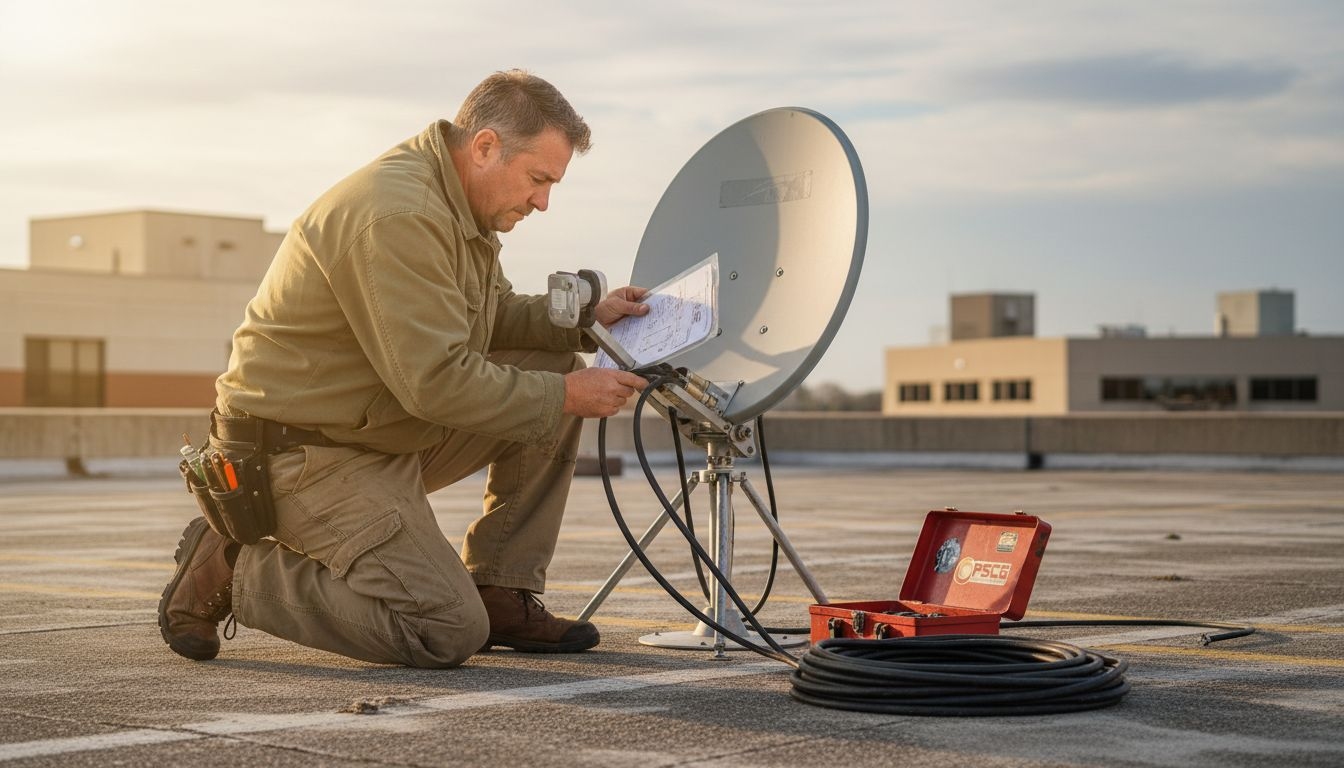
Satellite backup communications provide critical resilience when terrestrial networks fail during disasters. Hurricanes, earthquakes, and infrastructure attacks can destroy cell towers and radio repeaters, leaving agencies without communication links. Satellite systems maintain connectivity regardless of ground conditions.
| Technology | Data Speed | Coverage | Interoperability | Disaster Resilience | Primary Use |
|---|---|---|---|---|---|
| Legacy narrowband radios | Very Low | Regional | Limited | Moderate | Voice communication |
| FirstNet broadband | High | Nationwide | Excellent | Moderate | Data, video, applications |
| Satellite backup | Moderate | Global | Good | Excellent | Emergency backup |
Pro Tip: The most resilient communication strategies combine broadband for data-rich applications, legacy radios for reliable voice backup, and satellite systems for disaster recovery.
Agencies exploring these technologies benefit from public safety communication tips that help evaluate options and plan deployments. The FirstNet public safety network continues expanding capabilities and coverage annually.
Governance and leadership for effective communications
Governance provides the organizational framework that transforms communication technology into effective crisis response capability. Without clear policies, leadership structures, and coordination mechanisms, even the most advanced systems fail to deliver their potential value.
In the public safety context, governance encompasses several critical elements:
- Written policies defining roles, responsibilities, and communication protocols
- Leadership structures establishing decision authority during routine and emergency operations
- Inter-agency coordination agreements specifying how organizations will collaborate
- Training standards ensuring personnel can use systems effectively
- Continuous improvement processes incorporating lessons learned
The NECP framework emphasizes governance as a foundation for effective emergency communications. Governance models reduce communication failures by 25% by preventing confusion about roles, procedures, and capabilities when responders face high-pressure situations.
Strong governance delivers multiple benefits:
- Reduced communication failures through clear procedures and expectations
- Improved training consistency across agencies and jurisdictions
- Better resource allocation based on documented needs and priorities
- Enhanced accountability for system performance and maintenance
- Faster resolution of interoperability challenges through established relationships
Successful governance requires active leadership commitment. Public safety executives must prioritize communication system effectiveness, allocate resources for training and maintenance, and hold personnel accountable for following established protocols. Public safety leadership development programs help executives build these competencies.
Strategic planning public safety readiness incorporates communication system governance into broader organizational preparedness efforts. This integration ensures communication capabilities align with operational needs and emergency response strategies.
Advocacy also plays a key role. Leaders must engage policymakers and budget authorities to secure funding for system upgrades and ongoing operations. Public safety advocacy steps provide guidance for building these relationships and making compelling cases for investment.
The National Emergency Communications Plan offers detailed governance frameworks adaptable to agencies of all sizes and jurisdictions.
Common misconceptions and pitfalls in public safety communications
Many agencies approach communication system modernization with unrealistic expectations that lead to disappointment, delays, and budget overruns. Understanding these misconceptions helps leaders plan more effectively.
One widespread belief holds that upgrading to broadband systems is straightforward and quick. In reality, broadband migration involves complex technical integration, extensive training, and coordination across multiple stakeholders. Broadband migration projects often face 18-month delays and 25% budget overruns due to underestimated complexity.
“Agencies that fail to budget adequate contingencies for broadband implementation face average cost increases of 25% and project delays exceeding 18 months. These overruns stem from underestimating integration complexity, training requirements, and the need for parallel legacy system operations during transition.”
Another dangerous assumption involves relying exclusively on a single communication mode. Agencies that depend entirely on broadband or entirely on legacy radios leave themselves vulnerable when that system fails. Hurricanes can destroy cell towers. Cyberattacks can disable networks. Equipment malfunctions occur at the worst possible moments.
Inadequate training represents perhaps the most common pitfall. Purchasing advanced communication equipment means nothing if personnel cannot use it effectively under pressure. Many agencies invest heavily in technology while neglecting the ongoing training necessary to maintain proficiency.
Common pitfalls and solutions:
- Pitfall: Underestimating total cost of ownership. Solution: Include maintenance, training, and upgrade cycles in budget projections.
- Pitfall: Neglecting interoperability planning. Solution: Engage neighboring agencies early and establish formal agreements.
- Pitfall: Rushing implementation. Solution: Phase deployments with adequate testing and training at each stage.
- Pitfall: Ignoring user feedback. Solution: Involve field personnel in system selection and configuration decisions.
- Pitfall: Skipping redundancy. Solution: Maintain backup systems and alternative communication methods.
Agencies benefit from public safety communication tips for emergency leaders that address these challenges proactively. Understanding public safety broadband implementation challenges helps leaders avoid the most costly mistakes.
Implementing and upgrading communication systems
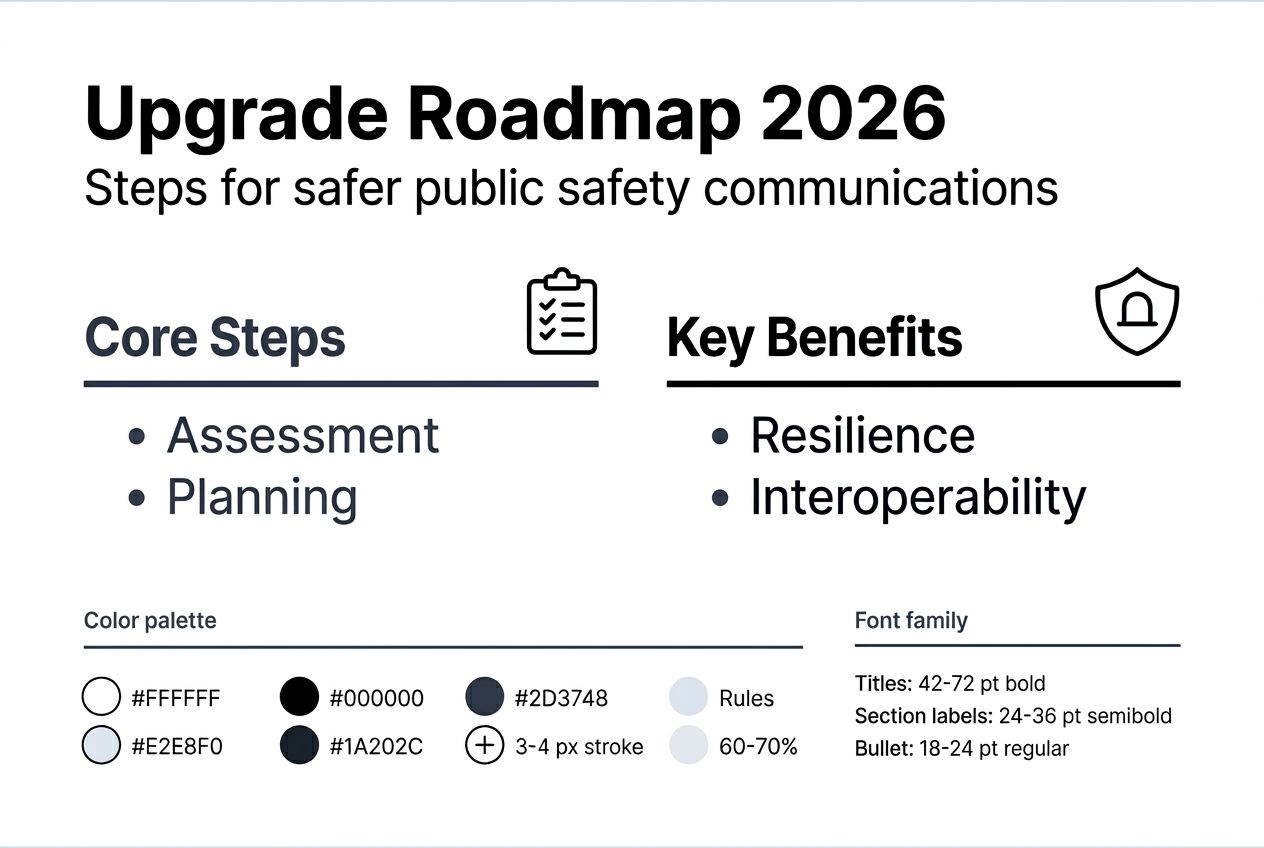
Successful communication system modernization follows a structured approach that balances technical requirements, organizational needs, and budget realities. This five-step framework provides a roadmap for agencies pursuing upgrades:
Assess current infrastructure and capabilities. Document existing equipment, coverage gaps, interoperability limitations, and user satisfaction. Identify specific operational needs the new system must address. This assessment establishes baseline performance and justifies investment decisions.
Develop governance framework and stakeholder agreements. Establish policies, leadership structures, and inter-agency coordination mechanisms before selecting technology. Secure written agreements with neighboring jurisdictions and mutual aid partners. Governance clarity prevents conflicts and confusion during implementation.
Plan technology upgrades with realistic timelines and budgets. Research available solutions, evaluate vendors, and develop detailed implementation plans. Include contingency buffers for unexpected challenges. Phase deployments to minimize disruption and allow learning between stages.
Implement comprehensive training programs. Train all personnel on new equipment and procedures before deployment. Conduct joint exercises with partner agencies to practice interoperable operations. Schedule refresher training at regular intervals to maintain proficiency.
Establish continuous improvement processes. Monitor system performance, collect user feedback, and track key metrics like response times and communication failures. Use this data to identify optimization opportunities and justify future investments.
Each step builds on the previous one. Skipping assessment leads to purchasing equipment that does not meet actual needs. Neglecting governance creates confusion about roles and procedures. Inadequate training wastes technology investments. Missing continuous improvement allows problems to persist unaddressed.
Real-world examples demonstrate this framework’s value. One Connecticut fire department completed a successful broadband integration by conducting thorough needs assessment, securing mutual aid agreements before procurement, phasing deployment across three stations, and providing 40 hours of hands-on training per responder.
Pro Tip: Engage experienced consultants during the assessment and planning phases. Their expertise helps you avoid common pitfalls, negotiate better vendor terms, and build realistic budgets with appropriate contingencies.
Agencies pursuing this structured approach benefit from public safety system assessment steps that provide detailed guidance for each phase. Training effectiveness improves when leaders apply best practices for EMS instructors to communication system education.
Optimize your public safety communication strategy with expert consulting
Modernizing communication systems demands specialized expertise many agencies lack internally. The Public Safety Consulting Group helps public safety leaders navigate the complexity of system assessment, governance development, and strategic planning to build interoperable communication capabilities that improve emergency response.

Our consultants bring decades of experience helping Connecticut agencies and organizations nationwide overcome the technical and organizational challenges that delay modernization projects. We guide you through comprehensive public safety system assessment steps, develop governance frameworks aligned with your operational needs, and create realistic implementation roadmaps that avoid costly overruns.
Whether you are exploring FirstNet adoption, upgrading legacy radio systems, or improving interoperability with neighboring jurisdictions, we provide the strategic guidance and practical support to achieve your communication goals. Our approach combines technical knowledge with deep understanding of public safety operations and the political realities agencies face.
Learn how strategic planning public safety readiness strengthens your overall emergency response capabilities. Discover our interoperability consulting services designed to help you maintain operational independence while gaining collaboration benefits. Contact us to discuss your communication system challenges and explore solutions tailored to your agency’s unique situation.
FAQ
What technologies support modern public safety communication systems?
Broadband networks like FirstNet, legacy narrowband radios, and satellite backup form the core technologies supporting modern public safety communications. FirstNet delivers high-speed data for video, mapping, and database access. Legacy radios provide reliable voice communication with proven durability. Satellite systems maintain connectivity when terrestrial infrastructure fails during disasters.
How does interoperability improve emergency response?
Interoperability enables agencies to communicate seamlessly across jurisdictions, reducing response times by up to 30% through eliminated relay delays. Real-time information sharing supports coordinated tactics and optimized resource deployment. Joint training builds the relationships and procedures that make interoperable systems effective during actual emergencies when communication failures can cost lives.
What are common challenges when upgrading communication systems?
Upgrade challenges include underestimated costs and complexity leading to 25% budget overruns and 18-month delays. Interoperability gaps emerge when agencies select incompatible equipment. Inadequate training leaves personnel unable to use new systems effectively. Proper assessment, realistic budgeting, phased implementation, and comprehensive training programs mitigate these risks and improve outcomes.
Why is governance critical to communication system effectiveness?
Strong governance provides clear policies, leadership structures, and training protocols that reduce communication failures by 25% and ensure reliability during emergencies. Written procedures eliminate confusion about roles and responsibilities under pressure. Inter-agency agreements enable seamless collaboration. Continuous improvement processes incorporate lessons learned and adapt systems to evolving needs.