


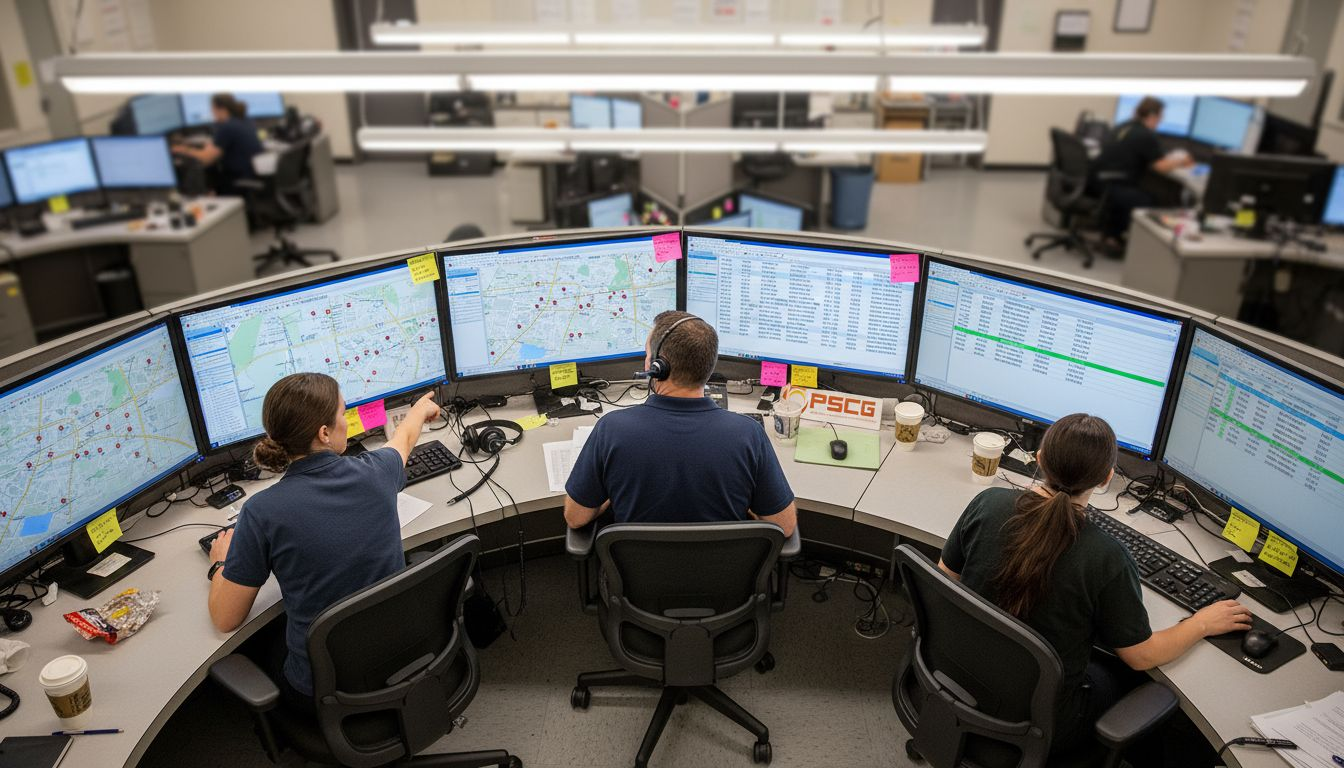
Response times can make or break an EMS system’s reputation in cities across the Northeastern United States. For public safety administrators and EMS managers, relying on traditional fixed ambulance deployment often limits flexibility just when demand spikes unexpectedly. System status management moves beyond static stations by using real-time and historical patterns to strategically position resources where they are most needed. This approach helps leaders achieve greater operational efficiency and more reliable coverage without additional personnel or vehicles.
Table of Contents
- Defining System Status Management In EMS
- Types Of System Status Management Models
- How System Status Management Optimizes Ambulance Deployment
- Technology, Data, And Regulatory Factors Influencing Status Management
- Operational Risks, Legal Challenges, And Best Practices
Key Takeaways
| Point | Details |
|---|---|
| System Status Management (SSM) Enhances Efficiency | SSM optimizes ambulance deployment by using real-time data to position units where demand is highest, significantly reducing response times. |
| Dynamic vs. Fixed Deployment Models | Choosing between fixed, dynamic, or hybrid models is crucial based on your system’s resources and demand patterns; each has distinct advantages and challenges. |
| Data and Technology are Fundamental | Successful SSM relies on high-quality data and advanced technology, which improve overall operational effectiveness and compliance with regulations. |
| Mitigating Risks is Essential | Implementing clear protocols and regular training helps reduce operational and legal risks associated with positioning decisions. |
Defining system status management in EMS
System status management (SSM) is a strategic approach to ambulance deployment that moves beyond fixed station locations. Instead of keeping units parked in the same spots all day, SSM dynamically repositions resources based on real-time and predicted demand patterns.
The core idea is straightforward: station ambulances where calls are most likely to occur during specific times and conditions. Historical data reveals predictable demand surges—morning rush hours, weekend nights, seasonal patterns. SSM takes advantage of these patterns.
How it differs from traditional deployment:
- Fixed stations: ambulances stay in assigned locations regardless of demand fluctuations
- System status management: units move strategically as call patterns change throughout the day
- Result: better coverage with the same or fewer resources
SSM involves ongoing assessment and strategic positioning of ambulances to meet call volume demands. This continuous evaluation process considers vehicle coverage, call patterns, and geographic service areas.
The system relies on move-up rules—predetermined protocols that define where units should position themselves when calls are running or forecasted to increase. When one ambulance leaves its station to respond, another unit automatically moves into the vacated area to maintain coverage.
Dynamic deployment models use historical data to predict where ambulances should be stationed. Northeast EMS systems, with their dense urban corridors and variable call volumes, benefit significantly from this adaptability.
Traditionally, SSM required constant manual coordination—dispatchers and supervisors constantly reshuffling positions on maps. That’s labor-intensive and error-prone. Modern implementations increasingly use specialized software to automate positioning recommendations and track unit movements.
The goal isn’t complexity for its own sake. It’s about reducing response times and improving coverage reliability with resources you already have. When done well, SSM makes your system more efficient without requiring additional staff or ambulances.
System status management transforms static deployment into dynamic responsiveness, matching ambulance positioning to actual and anticipated call demand patterns.
Pro tip: Start with 90 days of call data analysis before implementing SSM move-up rules—identify your peak demand times and geographic hotspots so your positioning decisions are based on actual patterns, not assumptions.
Types of system status management models
Not all SSM approaches look the same. Your system’s model depends on your resources, geography, call volume patterns, and operational priorities. Understanding the main categories helps you choose what works best for your department.
The three primary models differ in how aggressively they reposition units and how much data drives those decisions.
Fixed deployment keeps ambulances stationed at predetermined locations throughout their shift. Units respond from their assigned stations and return there when available. This approach is predictable and straightforward but doesn’t adapt when demand surges in unexpected areas.
Dynamic deployment uses real-time data and algorithms to constantly reposition units based on call demand. When a unit finishes a call, the system recommends where it should position next—not necessarily back to its original station. This maximizes coverage flexibility but requires more coordination and staff buy-in.
Hybrid models blend both approaches. Some units maintain fixed stations while others move dynamically, or units follow fixed patterns during predictable hours then shift to dynamic positioning during high-demand periods.
System status management models vary significantly in complexity and sophistication, ranging from informal positioning protocols to sophisticated algorithms using historical data and real-time information.
Here’s how they compare in practice:
- Fixed: Simple to manage, predictable for staff, limited flexibility during demand spikes
- Dynamic: Maximizes coverage, reduces response times, requires technology and cultural buy-in
- Hybrid: Balances predictability with flexibility, works well for mixed urban-rural systems
Your choice depends on what matters most. Dense urban systems with high, variable call volumes often benefit from dynamic or hybrid approaches. Rural or smaller systems may find fixed deployment sufficient and easier to manage.
Here’s a comparison of primary system status management models for EMS:
| Model Type | Data Usage | Resource Flexibility | Ideal Environment |
|---|---|---|---|
| Fixed Deployment | Low, basic call data | Limited, static positioning | Small/rural areas |
| Dynamic Deployment | High, real-time input | Maximum, frequent move-ups | Dense urban systems |
| Hybrid Approach | Moderate, mixed data | Balanced, flexible/stable | Urban-rural mixed regions |
The right SSM model matches your system’s resources, geography, and call patterns—not some theoretical ideal.
Pro tip: Before selecting your model, analyze 12 months of call data to understand your true demand patterns by time, day, and location; this data drives the right model choice for your specific system.
How system status management optimizes ambulance deployment
SSM doesn’t just shuffle ambulances around randomly. It uses data-driven strategies to place the right units in the right locations at the right times. This systematic approach delivers measurable improvements in response performance.
The foundation is historical call data analysis. Your system tracks where calls originate, when they occur, and what types of emergencies dominate specific neighborhoods. Weather patterns, traffic congestion, time of day, and day of week all influence call distribution.
Once you understand these patterns, SSM uses predictive analytics to position ambulances in locations where calls are most likely to occur. This proactive positioning dramatically reduces response times compared to reactive deployment.
Here’s what SSM accomplishes:
- Reduces response times by positioning units ahead of demand
- Improves coverage reliability across your entire service area
- Maximizes efficiency with existing resources
- Balances workload distribution among crews
- Adapts to predictable fluctuations in call volume
Consider a Northeast urban system with distinct patterns: weekday mornings surge with cardiac and trauma calls near business districts, weekend nights concentrate calls in entertainment areas, and rush-hour traffic spikes create predictable response challenges on corridors.

SSM addresses these specific patterns. Morning shifts position units near hospitals and downtown. Evenings reposition toward residential neighborhoods and nightlife zones. This targeted approach means fewer minutes to patient contact.
Continuous monitoring and redeployment enable EMS to meet fluctuating call volumes effectively. As units finish calls, the system recommends next positions based on real-time availability and predicted demand.
This isn’t passive—it’s active management. Dispatch centers track unit movements, update coverage maps, and guide crews to optimal staging locations. Over time, this compounds into significant performance gains.
The result: better response times without adding ambulances or personnel. You’re simply using what you have more intelligently.
System status management transforms ambulance positioning from guesswork into data-driven strategy.
Pro tip: Implement SSM positioning recommendations gradually and measure response times after each phase; this allows your crews to adjust to new positioning patterns while you build evidence of performance improvements to share with leadership.
Technology, data, and regulatory factors influencing status management
SSM doesn’t exist in a vacuum. Three critical forces shape how your system operates: the technology you use, the data you collect, and the regulatory requirements you must meet.
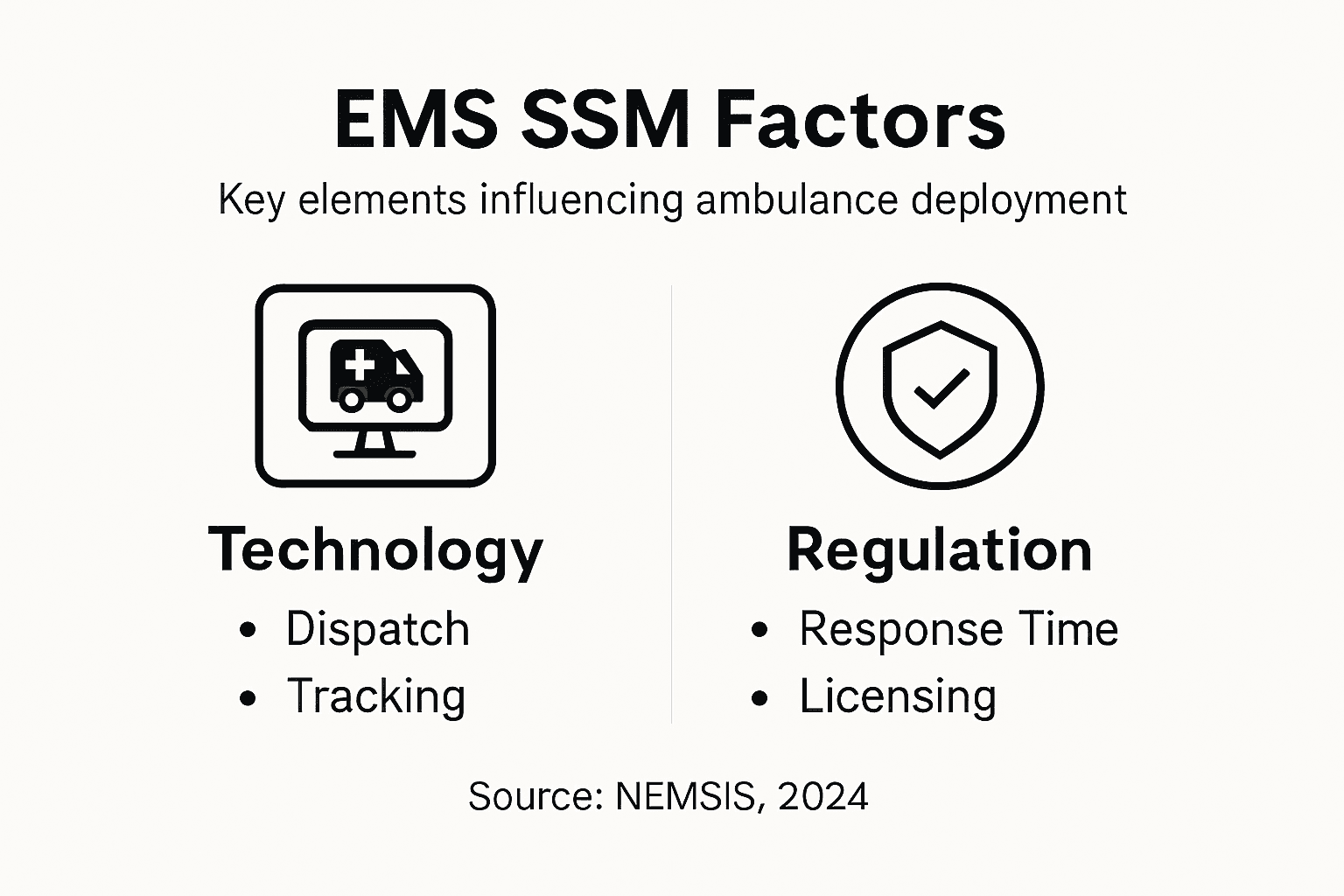
Modern dispatch systems have transformed what’s possible. Real-time tracking, integrated communication platforms, and data analytics allow continuous refinement of ambulance positioning. Your crews’ locations update instantly, allowing dispatchers to make smarter positioning decisions in seconds.
Data is the engine. Without reliable historical call data, SSM is guesswork. Data-driven dispatch systems and analytics platforms enable early triaging, effective resource allocation, and continuous quality improvement. You need to track call origins, response times, unit availability, and outcomes systematically.
The National EMS Information System (NEMSIS) provides standardized data collection frameworks. Your system should feed into these national standards, allowing comparisons with peer systems and identifying performance gaps.
Key technology components include:
- Real-time GPS tracking of ambulances and positioning status
- Integrated computer-aided dispatch (CAD) systems with decision-support tools
- Historical call data analytics and predictive modeling
- Performance dashboards tracking response times and coverage metrics
- Staff communication platforms for positioning updates
Regulatory factors create the operating boundaries. Response time standards—often specified by state health departments or regional authorities—define what you’re trying to achieve. Most Northeast jurisdictions require 90% of Priority 1 calls reached within 9 minutes in urban areas and 30 minutes in rural zones.
These aren’t arbitrary numbers. They reflect evidence-based guidelines balancing patient outcomes with operational feasibility. Your SSM strategy must align with these standards.
Other regulatory considerations include patient safety protocols, crew licensing requirements, and response time standards that shape EMS operations and resource distribution. Compliance isn’t optional.
You’ll also work with public safety agencies, highway safety departments, and medical directors. These partnerships influence your SSM protocols, ensuring alignment with broader community safety goals.
Key factors shaping effective system status management strategies:
| Factor | Role in SSM | Impact on Operations | Compliance Consideration |
|---|---|---|---|
| Technology | Real-time tracking tools | Speeds deployment decisions | Must meet security standards |
| Data Quality | Reliable call analytics | Accurate unit positioning | Align with NEMSIS frameworks |
| Regulations | Response time requirements | Defines minimum performance | Mandatory for legal protection |
Technology enables SSM, but data and regulations define its purpose and boundaries.
Pro tip: Audit your current data collection practices against NEMSIS standards; many systems discover gaps in historical data quality that undermine SSM accuracy—clean data now pays dividends in positioning precision later.
Operational risks, legal challenges, and best practices
SSM introduces real operational and legal complexities. When positioning decisions fail, patients suffer and lawsuits follow. Understanding these risks and implementing protections is non-negotiable.
Operational risks are immediate and tangible. Coverage gaps occur when units move to predicted demand areas but actual calls spike elsewhere. Delayed responses happen when move-up rules fail to account for simultaneous calls. Resource misallocation strands units in low-demand zones while others are overwhelmed.
These aren’t theoretical problems. They directly impact patient outcomes and response time compliance.
Legal exposure runs deeper. Operational risks including coverage gaps and delayed responses have legal ramifications if response time standards aren’t met. Liability claims arise when families argue that SSM positioning decisions delayed care. Regulatory compliance becomes a defense—documented protocols prove you made thoughtful decisions, not arbitrary ones.
Your biggest legal vulnerability is defensibility. Can you prove your positioning decisions were sound?
Risk mitigation requires these practices:
- Develop detailed, written deployment protocols specifying move-up rules and decision criteria
- Maintain comprehensive data documenting all positioning decisions and outcomes
- Conduct regular training on SSM protocols with all dispatch and field staff
- Review performance monthly, identifying gaps and adjusting rules
- Integrate clinical algorithms balancing efficiency with patient care quality
- Use sophisticated software reducing manual errors in move-ups
- Employ dedicated personnel overseeing status management daily
Dedicated status management personnel make a significant difference. One person focusing full-time on positioning, monitoring performance, and adjusting rules catches errors before they compound.
Software sophistication matters tremendously. Manual spreadsheets create errors and inconsistency. Integrated CAD systems with decision-support tools reduce human mistakes and provide audit trails for legal defensibility.
Staff training often gets overlooked. Crews must understand why they’re being positioned somewhere, not just comply with directives. When they understand the logic, buy-in improves and compliance increases.
Best practices transform SSM from a liability risk into a defensible operational strategy.
Pro tip: Document every deployment protocol decision with the data supporting it; when questioned about why you positioned units a certain way, that documentation becomes your legal shield—vague positioning decisions invite lawsuits, detailed reasoning defends them.
Elevate Your EMS System Status Management Today
Managing ambulance deployment through system status management is critical to improving EMS response times and ensuring consistent coverage. The challenges of dynamic ambulance positioning, data-driven move-up rules, and regulatory compliance require expert guidance to implement effectively and reduce operational risks. If your EMS system is committed to transforming static deployment into agile, proactive strategies, understanding these complexities is the first step toward success.
Take control of your EMS system status management with The Public Safety Consulting Group. Our Connecticut-based team specializes in EMS system design, operational risk reduction, and leveraging data-driven approaches to optimize ambulance positioning. Let us help you translate call data into actionable deployment protocols while ensuring compliance with state standards. Don’t wait for inefficient coverage or legal exposure to impact your community—explore how our proven consulting solutions can strengthen your system today. Visit The Public Safety Consulting Group, learn more about EMS system design, and take the next step toward responsive, reliable EMS coverage now.
Frequently Asked Questions
What is system status management (SSM) in EMS?
SSM is a strategic approach to ambulance deployment that dynamically repositions resources based on real-time and predicted demand patterns, rather than relying on fixed station locations.
How does SSM improve EMS response times?
SSM improves response times by positioning ambulances in areas where calls are most likely to occur, utilizing historical data and predictive analytics to stay ahead of demand fluctuations.
What are the different types of system status management models?
The primary models of SSM include fixed deployment, dynamic deployment, and hybrid models. Each model varies in how units are deployed and how much data drives their positioning decisions.
What technology is essential for effective system status management?
Essential technology for SSM includes real-time GPS tracking, integrated computer-aided dispatch (CAD) systems, historical call data analytics, and performance dashboards to monitor response times and coverage.
Recommended
- The Impact of Climate Change on EMS: Preparing for More Extreme Weather Events | The Public Safety Consulting Group
- Unified Command in EMS: Why ICS Isn’t a License to Direct Patient Care | The Public Safety Consulting Group
- C-MED Dispatch Centers: A Dying Technology or a Sleeping Giant Ready to Evolve? | The Public Safety Consulting Group
- EMS Needs Smart Growth, Not Expensive Gadgets and Procedures | The Public Safety Consulting Group
- Enhancing Business Safety with Voipcom e911 Notifications – Voipcom
- What Is Incident Response and Why It Matters – TECHTRON